Few things worry parents more than the idea of their child being picked on. Maybe your child came home quiet one afternoon. Maybe a teacher mentioned some trouble at recess. Or maybe you simply want your child prepared before anything happens.
Many parents in Morris Plains and Morristown start looking at martial arts for exactly this reason. It is a reasonable instinct. But it helps to understand what martial arts can and cannot do, and why the most important lessons have very little to do with fighting.
This guide covers how taekwondo training can support a child facing bullying, what skills matter most, and how parents can reinforce those skills at home.
What bullying usually looks like
Bullying is rarely a dramatic playground fight. More often it is repeated, smaller behavior that wears a child down over time.
- Name-calling, teasing, or mocking
- Leaving a child out on purpose
- Spreading rumors or unkind messages
- Pushing, grabbing, or blocking someone's way
- Taking or damaging belongings
Because most bullying is social and verbal, the skills that help most are social and emotional too. Confidence, posture, voice, and knowing how to get help are often more useful than any physical technique.
Why confidence is the first line of defense
Children who are targeted are often those who seem unsure of themselves. That is not their fault. But it does mean that helping a child carry themselves with more confidence can change how others respond to them.
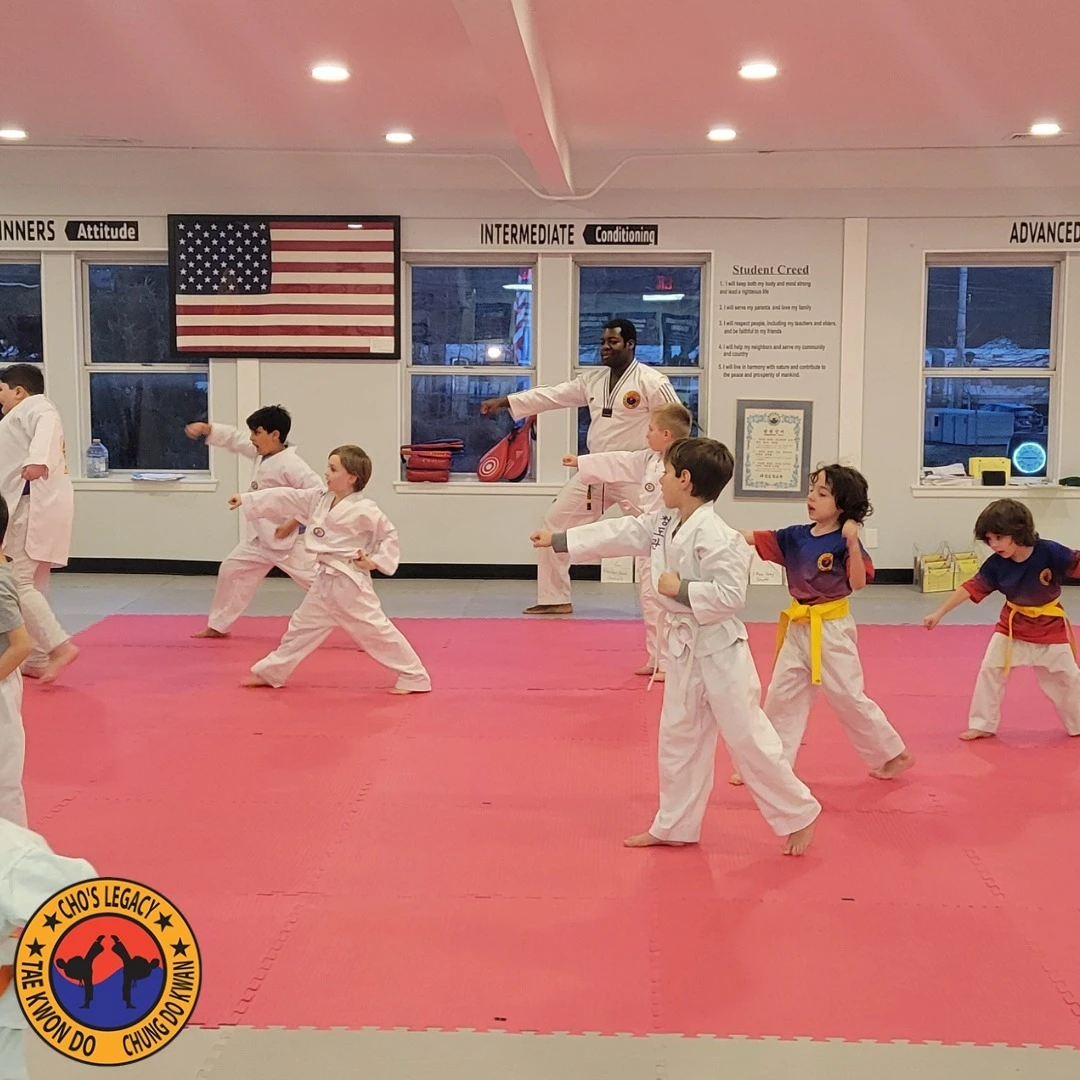
How taekwondo practices confidence
- Standing tall in a ready stance with eyes forward
- Answering instructors with a clear, strong voice
- Performing a form in front of classmates
- Earning new belts through steady effort
- Being trusted to help a newer student
Each of these is small. Together, they give a child repeated experiences of being seen, being capable, and being respected. Over time, many children begin to carry that feeling outside the school.
Awareness and avoidance come first
A responsible martial arts school teaches children that the best fight is the one that never happens. Children practice noticing situations that feel wrong, creating distance, and finding a trusted adult.
Simple awareness habits
- Notice where adults are in any space, such as recess or the bus stop
- Stay with friends rather than alone when possible
- Trust the feeling that something is not right
- Walk away calmly instead of reacting to teasing
- Tell a teacher or parent, and keep telling until someone helps
Children sometimes worry that telling an adult is tattling. Help them understand the difference. Tattling is trying to get someone in trouble. Reporting is trying to keep someone safe.
Using a strong voice
One of the most practical tools a child can have is a firm, clear voice. In taekwondo class, students often answer loudly and use a kihap, a sharp shout, during techniques. It can seem like a small thing, but practicing a big voice in a safe place makes it easier to use one when it matters.
A child who can look someone in the eye and say "Stop. I don't like that." in a steady voice is sending a powerful message. Many bullies look for a reaction of fear or tears. Calm confidence is often not what they expect.
Practice phrases at home
- "Stop. I don't like that."
- "Leave me alone."
- "I'm going to tell a teacher."
- "That's not okay."
Role-play these at the kitchen table. Let your child practice standing tall and using their voice. Make it light and encouraging.
What about physical self-defense?
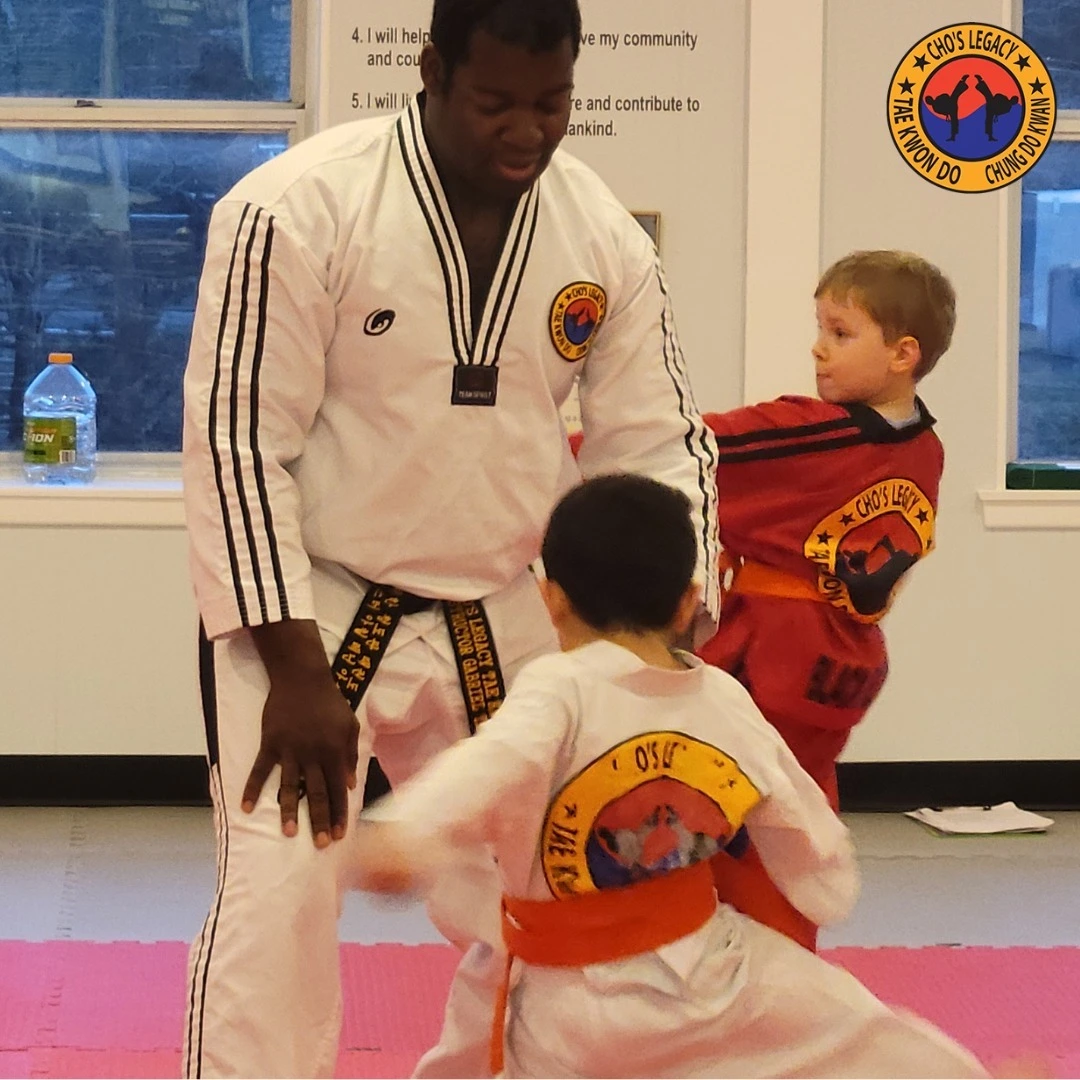
Physical skills have a place. Learning how to block, keep balance, and move away from a grab can help a child feel safer. But these skills come with responsibility. At Cho's Legacy TKD, self-control is one of the core values, and students learn that techniques are for protection, never for showing off or settling arguments.
Parents should be cautious of any program that suggests martial arts will let their child win fights. The goal is safety, not victory.
A story many parents will recognize
Think of an eight-year-old boy who started classes after some rough weeks at school. He was soft-spoken and kept his head down. His instructor never pushed him to be loud on day one. Instead, she asked him to count the warm-up for the class, a little louder each week. By the time he earned his next belt, he was leading the count without being asked. His mother noticed he had started making eye contact when he talked to adults. The teasing at school did not vanish overnight, but he stopped acting like a target, and he started telling his teacher when something happened.
That story is a composite of experiences many martial arts families describe, not a promise. Every child moves at their own pace.
How parents can help at home
Martial arts works best as a partnership. Here are ways to support your child between classes.
- Ask open questions about school, such as "Who did you sit with at lunch?"
- Praise effort and courage, not just results
- Let your child show you what they learned in class
- Stay in contact with teachers if you have concerns
- Model calm, respectful responses to conflict yourself
When to seek more help
If bullying involves threats, injuries, or signs that your child is withdrawing, losing sleep, or avoiding school, contact the school administration right away. A pediatrician or counselor can also help. Martial arts is a support, not a substitute for adult intervention.
Choosing the right class
Look for a class where your child is challenged but supported. At Cho's Legacy TKD, Little Dragons gives ages 4 to 5 a gentle start, and Basic Juniors Taekwondo helps ages 6 to 12 build fundamentals, focus, and confidence. Teens can train in the Teen and Adult Black Belt Club.
Signs your child may be dealing with bullying
Many children do not say the word bullying out loud. They may feel embarrassed, worry about making it worse, or simply not have the words for what is happening. That means parents often need to notice the signs before a child speaks up.
- Sudden reluctance to go to school, the bus stop, or a regular activity
- Frequent stomachaches or headaches on school mornings
- Missing or damaged belongings with vague explanations
- Changes in eating, sleeping, or mood
- Avoiding friends they used to enjoy
- Seeming upset after time online or on a phone
None of these signs proves bullying on its own. Children go through ups and downs for many reasons. But if you notice several together, it is worth a calm, private conversation. Start with curiosity rather than alarm, and let your child know they are not in trouble.
Starting the conversation
Choose a relaxed moment, such as a car ride or a walk. Side-by-side conversations often feel easier for children than face-to-face questions. Try something like, "Some kids at school can be pretty unkind sometimes. Has anything like that happened to you or a friend?" Then listen more than you speak.
How the dojo environment supports kids
A martial arts class can offer something many children are missing when they feel targeted: a place where they belong. In a well-run class, every student bows in together, follows the same rules, and is treated with the same respect regardless of who they are at school.
- Clear rules about kindness, applied to everyone
- Instructors who step in quickly if a student is unkind
- Older students modeling respectful behavior
- A shared goal of improving together rather than competing to be popular
For a child who feels on the outside at school, having a second community where they are welcomed by name can make a real difference. It reminds them that one difficult setting does not define them.
Frequently asked questions
Does martial arts help kids who are being bullied?
Martial arts can help children practice confidence, posture, a strong voice, and awareness. These skills may help a child respond to bullying more calmly. It works best alongside support from parents and teachers.
Will martial arts make my child aggressive?
A well-run school emphasizes self-control and respect. Students learn that techniques are only for protection. Many parents notice calmer behavior rather than more aggressive behavior.
How long before I see a change in confidence?
Every child is different. Some show more confidence within a few weeks, while others need longer. Consistent attendance and encouragement at home make a big difference.
Is my child too shy for martial arts?
Shy children are often the ones who benefit most from a supportive class. Good instructors make the first steps small and celebrate effort.
Take the first step
If your child could use more confidence, come see a class. Cho's Legacy TKD in Morris Plains welcomes families from Morristown and nearby towns. Try three classes for $30 with a uniform included, and arrange an introductory appointment with the school so we can meet your child and answer your questions.
New Student Experience
Ready to See It In Person?
3 classes — $30
Keep Reading
Parenting
How to Choose a Martial Arts School in Morris County: A Parent's Checklist
Child Development
Taekwondo vs Karate vs Jiu-Jitsu for Kids: Which Is the Best Fit?
Family
Martial Arts Classes in Morris Plains for the Whole Family
Parenting