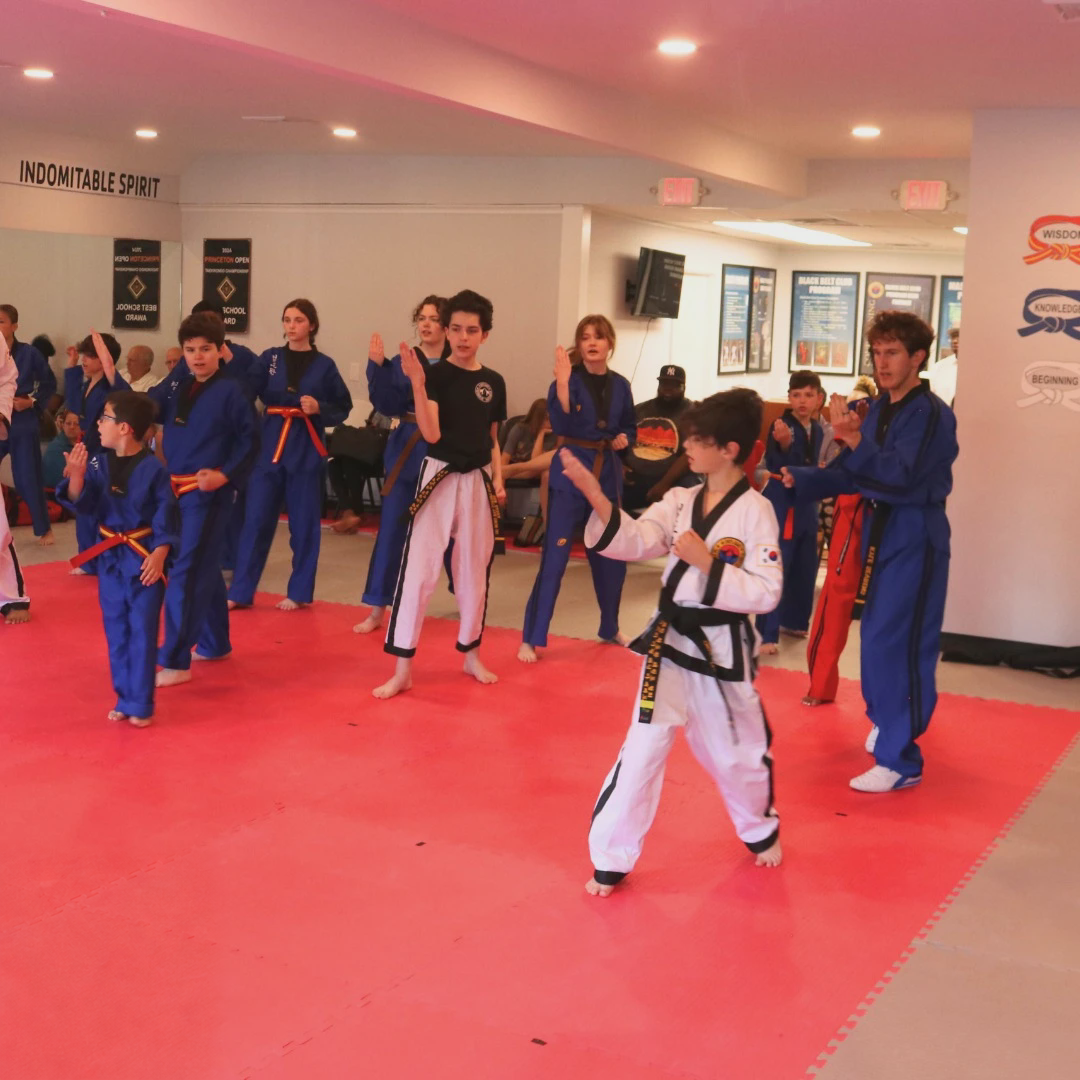
When a child has plenty of energy but finds it difficult to pause, listen, or stick with a task, parents often look for an activity that offers more than a way to fill the afternoon. They want movement, meaningful guidance, and a place where their child can practice getting along with others. Basic Juniors taekwondo at Cho’s Legacy TKD in Morris Plains can offer a structured setting to work on those everyday skills.
There is no single class or activity that guarantees a child will become more confident or focused. Those qualities develop differently, and growth takes time. Taekwondo gives children repeated opportunities to listen, try, make adjustments, show respect, and keep practicing. What children rehearse on the mat can become useful language and habits to carry into ordinary moments at home, school, and with peers.
What Basic Juniors means for children ages 6–12
Basic Juniors is Cho’s Legacy TKD’s program for children ages 6 through 12. The wide age range includes many stages of childhood, so children may arrive with different personalities, prior experience, and comfort levels. Some are eager to jump into a group. Others may need a little time to watch, learn names, and understand what is expected.
Taekwondo practice brings together physical activity and clear routines. Students hear directions, observe demonstrations, take turns, and work through movements with attention to detail. These simple patterns create chances to practice listening and focus in a setting that is active rather than desk-bound.
Respect is part of how students take part, not a slogan to memorize. Children can practice greeting instructors and classmates, paying attention when someone is speaking, waiting for a turn, and treating others thoughtfully. These behaviors matter in class, but they also connect naturally to the kinds of interactions families want children to handle beyond the school.
Families considering a younger child may also want to explore Little Dragons, the program for ages 4–5. For ages 6–12, Basic Juniors provides the age-appropriate starting point. A parent can ask the school which class is a fit for a particular child and what to expect on a first visit.
Focus grows through small acts of attention
Focus is often described as if it were a fixed trait: a child either has it or does not. In real life, attention shifts with fatigue, excitement, stress, and the task at hand. Practice gives children a chance to notice directions, begin a task, stay with it for a short stretch, and reset when their attention wanders.
In a taekwondo class, a child may listen for a cue, watch an instructor demonstrate a movement, then try to reproduce it. The sequence asks for attention in more than one way. Rather than expecting perfection on the first attempt, a parent can value the process of listening, trying, and responding to feedback.
At home, caregivers can reinforce the same idea without turning every evening into a lesson. Try one calm, specific request, such as putting shoes in their place or picking up a few toys. Notice the effort to respond, then offer a brief reminder if needed. This keeps the emphasis on practicing follow-through, not on expecting a dramatic change overnight.
Helpful questions after class might include:
- What direction did you remember today?
- Was there something you tried more than once?
- What helped you pay attention when the room felt busy?
These questions invite a child to reflect without testing or comparing them. For ideas on how structured training can support the wider childhood experience, see kids martial arts classes. Every child’s attention is different, and the goal is steady practice, not a promise of a particular result.
Respect is practiced in everyday interactions
Children learn about respect through the way people treat one another. In a class, the small exchanges are often as important as the movements: greeting an instructor, listening while a classmate has a turn, following shared directions, and using considerate words. Those moments give children a concrete way to practice being part of a group.
Respect does not mean a child should never ask questions, express discomfort, or speak up. A healthy learning environment can make room for curiosity and personal boundaries while still asking students to treat others with care. Parents can reinforce that balance by noticing both kindness and self-advocacy.
The school’s approach emphasizes habits that have relevance outside training too. At home, children can practice responding when a parent asks for help, putting away belongings, or contributing to a simple family task. These are ordinary responsibilities, not tests of character. A child may need reminders, and that is part of learning.
Parents can make carryover easier with a few realistic routines:
- Choose one manageable responsibility and explain it clearly.
- Give the child time to respond before repeating the request.
- Acknowledge a helpful action specifically, such as, “Thanks for putting your bag away.”
- Keep expectations appropriate to the child’s age and circumstances.
The point is not to make taekwondo a substitute for parenting. It can complement the guidance children receive from family by giving them another setting to practice listening, courtesy, and consideration.
Confidence comes from trying, not from guarantees
Confidence is not the same as being the loudest person in the room or never feeling nervous. For many children, confidence is a willingness to participate, ask for help, try something unfamiliar, or return after a challenging moment. Those small choices can matter, even when no one else sees a dramatic transformation.
A class can provide repeated chances to try movements, hear feedback, and make another attempt. A child might feel unsure at first, or enjoy the experience immediately. Both responses are normal. Adults can support confidence by recognizing effort and patience rather than comparing a child with classmates or measuring progress against a fixed timeline.
If your child is shy, it may help to talk about what the first visit will look like in simple terms. Explain that they will meet an instructor, learn about the class, and have a chance to participate. Avoid telling them they must feel brave or that they will love it. They can be curious and nervous at the same time.
A supportive group also matters. Cho’s Legacy TKD describes a culture in which students encourage one another and build connections through training. Relationships take time to develop, and each child participates differently. Parents can ask how instructors help a new student settle in and how the class supports respectful interaction.
Movement, relationships, and learning together
Taekwondo gives children a reason to move their bodies while learning alongside other people. In an age when much of daily life can happen through screens, in-person activities offer a different kind of practice: making eye contact, greeting someone, listening in a shared space, and taking turns. Technology has a place in children’s lives, and physical, face-to-face experiences can complement it.
A group class asks children to pay attention not only to an instructor but also to the people around them. They learn how to share space, follow common routines, and notice that classmates may be working at different paces. This can help make cooperation visible: everyone is learning, and a child’s own effort can coexist with encouragement for someone else.
Parents who want to understand the broader program options can read about adult martial arts as well. While this article is focused on Basic Juniors, families sometimes appreciate knowing that the school serves more than one age group. Program structure and eligibility differ, so ask Cho’s Legacy TKD directly about the right route for each family member.
A useful way to discuss class is to focus on connection rather than performance. Ask who the child practiced with, what they noticed about the group, or what felt easier after a few tries. That helps children understand that participation includes listening and supporting others, not only demonstrating a movement successfully.
Choosing a class that fits your child
The best first step is a conversation about your child’s age, interests, and needs. Basic Juniors serves ages 6–12, but age alone does not describe a child’s comfort with groups, activity level, or reasons for wanting to try taekwondo. Sharing those details with the school can help set useful expectations for the introductory visit.
Consider asking:
- How does the instructor introduce a new student to the class?
- What should my child wear or bring for the first visit?
- How do you encourage listening and respectful participation?
- What can a parent do if a child feels hesitant at first?
- How do you communicate with families about a child’s progress?
The right choice is one your family can evaluate through experience. Notice whether directions are clear, whether your child is treated with care, and whether the class feels like a setting where they can participate at their own pace while learning the shared expectations.
Cho’s Legacy TKD offers a trial of three classes for $30, with a new uniform included. The school will confirm your introductory appointment time. Confirm the appointment time with the school when booking, and ask any practical questions in advance.
FAQ: Basic Juniors taekwondo in Morris Plains
What age is Basic Juniors taekwondo for?
Cho’s Legacy TKD’s Basic Juniors program is for children ages 6–12. Children outside that age range may have a different program option. Ask the school about the best fit based on your child’s age and current program eligibility.
Can taekwondo help my child focus?
Class routines give children opportunities to practice listening to directions, observing, and returning attention to a task. Children vary, and no class can guarantee a particular change in focus. Families can support practice by using clear, manageable expectations at home too.
Will taekwondo make my child more confident?
There is no guaranteed outcome. Training can give a child opportunities to try unfamiliar tasks, receive guidance, and participate with others. Confidence may look different from one child to another, and develops on an individual timeline.
What does the trial include?
The introductory offer is three classes for $30 and includes a new uniform. Contact the school to arrange your introductory appointment. Confirm the exact time and arrival details with Cho’s Legacy TKD.
Is there a program for younger children?
Little Dragons is for ages 4–5. Basic Juniors is for ages 6–12. Contact the school if you are unsure which age group applies or want to understand the transition between programs.
Take the next step with Cho’s Legacy TKD
If you are looking for an active, structured activity where your child can practice focus, respect, and confidence through everyday effort, learn more about Basic Juniors at Cho’s Legacy TKD in Morris Plains. The aim is not to promise who a child will become. It is to offer consistent opportunities to listen, participate, try again, and learn alongside others.
Ask about the three-class trial for $30, including a new uniform, and book the introductory appointment. You can use that first conversation to share what your child is looking for, ask how the class works, and decide whether the environment feels right for your family.
New Student Experience
Ready to See It In Person?
3 classes — $30
Keep Reading
Parenting
How to Choose a Martial Arts School in Morris County: A Parent's Checklist
Child Development
Taekwondo vs Karate vs Jiu-Jitsu for Kids: Which Is the Best Fit?
Parenting
Martial Arts and Bullying: Helping Morris Plains Kids Build Real Confidence
Family